
PICO Genesis Laser: Advanced Pigmentation & Skin Rejuvenation
PICO Genesis is a non-thermal picosecond laser approach that reduces pigment and stimulates skin rejuvenation through photo-mechanical disruption, offering a modern pathway to fade age spots and improve texture with minimal downtime. This article explains how PICO Genesis works, the specific skin conditions it treats, and the clinical benefits you can expect, while providing practical guidance on treatment timelines and safety across skin tones. Readers will learn the mechanism of picosecond pulses, why non-thermal photo-mechanical action matters for darker skin, and how sessions are typically scheduled to maximize pigment clearance and collagen stimulation. We also map expected results, compare PICO Genesis to other laser modalities, and outline what to expect during a treatment journey at a local provider in the Las Vegas Valley. Throughout the guide we integrate local availability and pricing so you can evaluate options and plan a consultation, while keeping the primary focus on evidence-based explanation and patient-centered expectations.
Picosecond Laser for Skin Rejuvenation and Pigmentation: A Systematic Review
The PICO Genesis laser is a non-thermal picosecond laser approach that reduces pigment and stimulates skin rejuvenation through photo-mechanical disruption, offering a modern pathway to fade age spots and improve texture with minimal downtime. This article explains how PICO Genesis works, the specific skin conditions it treats, and the clinical benefits you can expect, while providing practical guidance on treatment timelines and safety across skin tones. Readers will learn the mechanism of picosecond pulses, why non-thermal picosecond lasers are effective for pigmentary conditions, and the advantages of PICO Genesis over other laser treatments.
What is PICO Genesis and How Does This Picosecond Laser Treatment Work?
PICO Genesis is a picosecond laser protocol that uses ultra-short pulses to fragment pigment particles and create acoustic waves that stimulate dermal remodeling, producing pigmented lesion clearance and collagen-boosting skin rejuvenation. The mechanism relies on photo-mechanical disruption rather than sustained thermal injury, which minimizes heat-related side effects and reduces the risk of post-inflammatory hyperpigmentation for many skin tones. By targeting pigment with very short 532nm and 1064nm wavelengths in a dual-wavelength strategy, PICO Genesis treats both epidermal and dermal pigment while also prompting fibroblast activity for texture improvement. Understanding this mechanism helps patients choose the right laser approach and sets expectations for session frequency and visible timelines. The next section contrasts PICO Genesis with conventional laser options to show how its non-thermal action changes both efficacy and safety.
What Makes PICO Genesis Different from Other Laser Treatments?
PICO Genesis differs from traditional thermal lasers because it delivers picosecond pulses that produce a photo-mechanical effect on pigment rather than heating tissue for coagulation, which changes safety and recovery profiles. This non-thermal mechanism tends to lower the risk of thermal injury and post-inflammatory hyperpigmentation, particularly valuable for individuals with higher Fitzpatrick skin types who need effective pigment clearance with caution. Compared with fractional resurfacing or intense pulsed light (IPL), PICO Genesis often requires fewer treatments to produce visible pigment reduction for specific lesions while preserving rapid recovery and short session times. These advantages make PICO Genesis an attractive option for pigment-focused goals while still allowing practitioners to combine modalities for texture or resurfacing when clinically indicated.
How Does PICO Genesis Use Photo-Mechanical Disruption to Improve Skin?
PICO Genesis delivers ultra-short picosecond pulses that shatter pigment into microscopic particles via acoustic shockwaves, enabling the body’s immune system to clear debris more efficiently than with larger thermal fragments. Photo-mechanical fragmentation of melanin and tattoo ink reduces visible discoloration while the microtrauma triggers fibroblast activation and collagen remodeling, improving fine lines and skin texture over weeks to months. Dual-wavelength protocols (commonly 532nm for superficial pigment and 1064nm for deeper pigment) enable targeted treatment across epidermal and dermal deposits without prolonged heating of surrounding tissue. This combination of pigment fragmentation and dermal stimulation explains why PICO Genesis can simultaneously address discoloration and early signs of aging.
Which Skin Conditions Can PICO Genesis Effectively Treat?
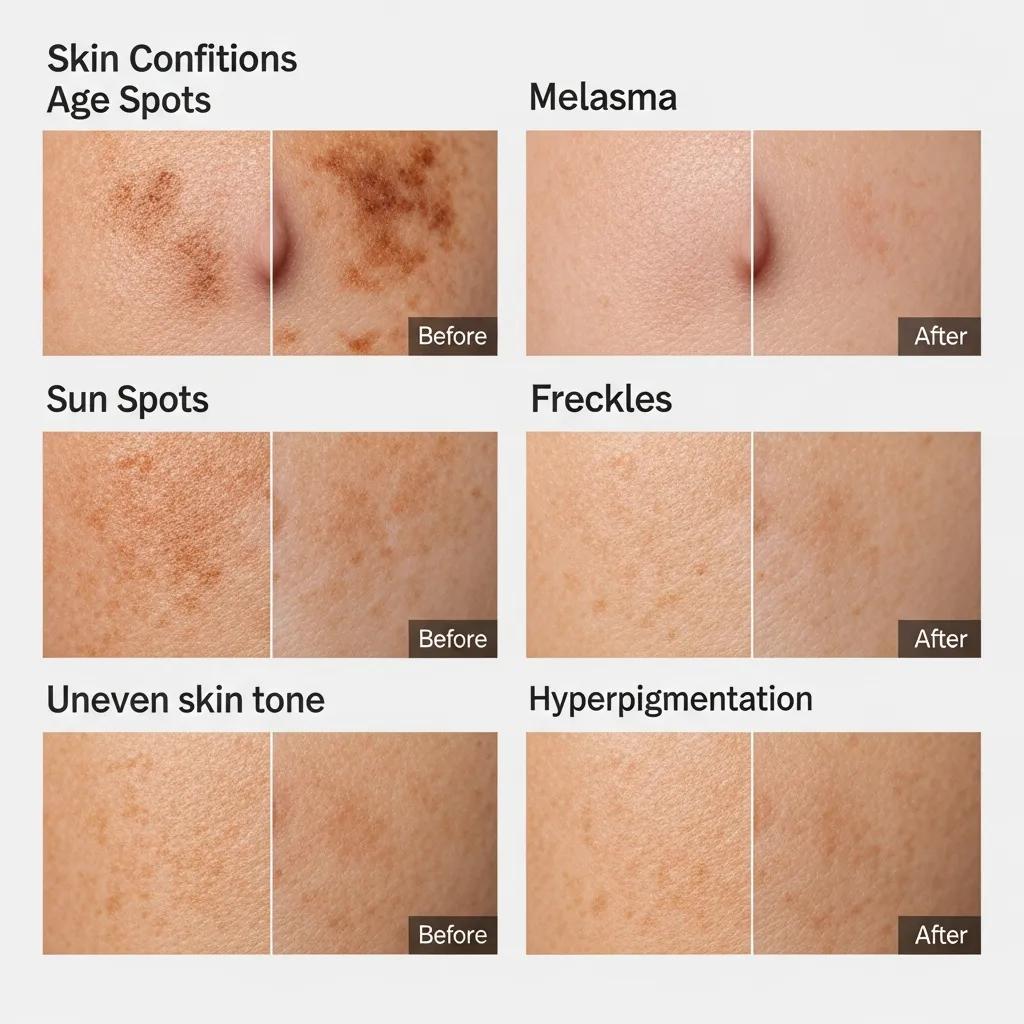
PICO Genesis effectively treats a range of pigmented and texture-related conditions by combining precise pigment targeting with dermal remodeling, producing measurable improvement in tone and clarity. Its dual-wavelength picosecond pulses are particularly adept at breaking down age spots, sun damage, and various pigmented lesions while also improving texture and early scarring signs. The table below maps common conditions to how PICO Genesis treats them and realistic outcome timelines, offering a quick reference for patients evaluating treatment options.
Different pigment and texture concerns respond distinctly to PICO Genesis based on depth and pigment type.
This table clarifies expected outcomes and timelines so patients can set realistic goals and discuss tailored plans with their provider. The following subsections detail melasma management and outcomes for superficial sun damage to guide expectations further.
How Does PICO Genesis Address Melasma and Hyperpigmentation?
Melasma and complex hyperpigmentation are commonly challenging because they involve both epidermal and dermal pigment and are influenced by hormonal and environmental factors; PICO Genesis approaches these conditions by fragmenting pigment while minimizing thermal injury. Treatment plans for melasma often require conservative, incremental sessions and may be combined with topical maintenance, sun protection, and follow-up assessments to reduce recurrence risk. Results can be gradual and variable, with meaningful improvement after multiple treatments and ongoing maintenance, particularly when protocols are individualized for skin tone and pigment depth. Careful patient selection and test spots help determine appropriate settings and reduce the chance of adverse pigmentary responses in darker skin.
Efficacy and Safety of Picosecond Laser for Melasma Treatment
Picosecond laser at 1064 nm is safe and effective for melasma treatment. Picosecond laser at 755 nm is not superior to topical hypopigmentation agents in treating melasma. The exact efficacy of other wavelengths of picosecond laser for melasma treatment remains to be verified in large-scale RCTs.
PICO Genesis is highly effective for superficial pigment like age spots and sun damage because picosecond pulses break down epidermal melanin into fragments small enough for rapid clearance, often producing visible lightening after a short series of sessions. Typical treatment courses for sun spots or lentigines range from one to a few sessions spaced several weeks apart, with many patients seeing noticeable results within weeks and progressive improvement over months. Sessions are short—often around 20 minutes—and downtime is minimal, allowing most patients to return to daily activities quickly. For persistent or deeper brown spots, practitioners may recommend a tailored series to maximize clearance while monitoring skin response closely.
What Are the Benefits of PICO Genesis Laser Treatment?
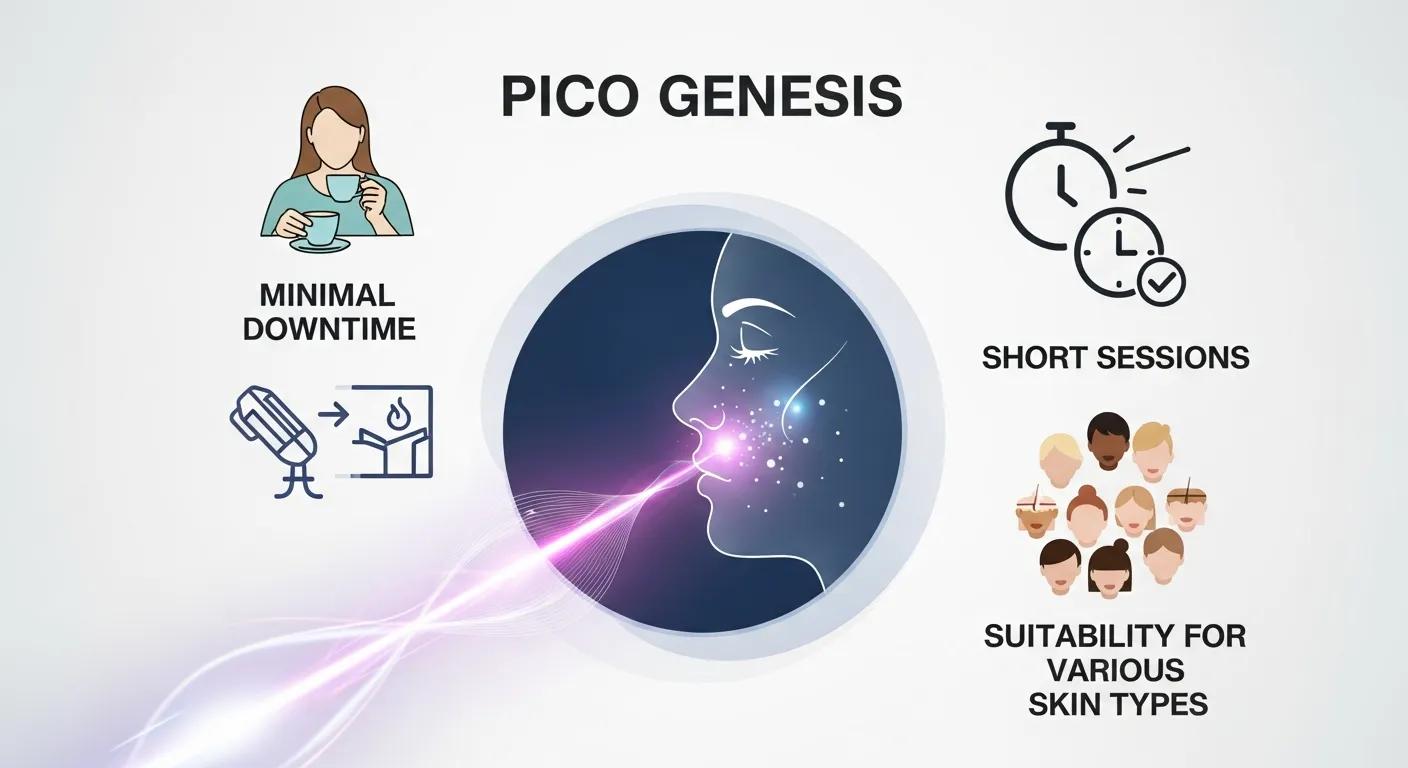
PICO Genesis delivers multiple patient-facing benefits that include precise pigment targeting, collagen stimulation, and a favorable safety profile due to its non-thermal, picosecond mechanism. Patients benefit from short treatment sessions, minimal downtime, and reduced thermal risk compared with some conventional lasers, which contributes to broader suitability across skin tones.
Key benefits of PICO Genesis include pigment reduction, collagen stimulation, and fast recovery.
- Minimal Downtime: Most patients experience only brief redness or mild swelling and can resume normal activities quickly.
- Short Sessions: Typical appointments are brief—often about 20 minutes—making treatments convenient for busy schedules.
- Broad Skin-Type Suitability: The non-thermal approach reduces thermal injury risk, supporting safer use on darker skin tones.
These benefits make PICO Genesis a compelling option for those prioritizing effective pigment correction with limited interruption to daily life.
Is PICO Genesis Suitable for All Skin Types and Tones?
PICO Genesis is designed with a non-thermal photo-mechanical mechanism, which lowers the incidence of heat-induced pigmentary changes and makes it a preferable option for many skin tones when used by experienced providers. Proper assessment—including skin type evaluation and potential test spots—remains essential to tailor fluence and wavelength selection and to reduce the likelihood of post-inflammatory hyperpigmentation in darker skin. When carefully applied with conservative settings and appropriate aftercare, PICO Genesis can be a versatile tool for Fitzpatrick skin types I–VI, delivering pigment improvement with managed risk. Providers will weigh individual patient history, pigment depth, and concurrent therapies to determine an optimal, safe protocol.
What is the Typical Downtime and Treatment Duration?
A hallmark of PICO Genesis is short session duration—commonly around 20-30 minutes—and minimal recovery, which typically involves transient redness or slight swelling that subsides within hours to a day. Because the treatment is non-thermal, patients often resume normal routines the same day with simple post-care measures like gentle skincare and sunscreen, enabling quick return to work and social activities. Visible improvements accumulate over weeks as pigment clears and collagen remodeling progresses, with full benefits emerging after the recommended series of sessions.
What to Expect During Your PICO Genesis Treatment Journey at Original You in Las Vegas?
At Original You, your PICO Genesis journey begins with a comprehensive consultation that assesses pigmentation type, skin tone, and treatment goals to build a personalized plan that balances efficacy and safety. Original You, serving the Greater Las Vegas Valley, offers PICO Genesis using a Cutera Enlighten III® picosecond device and provides free consultations to discuss individualized treatment plans, which helps local patients understand options and timelines before committing to a series. During treatment visits, sessions are efficient—often around 20-30 minutes—and protocols are adjusted based on response and comfort, with post-care guidance to protect results and minimize complications. For readers in Las Vegas neighborhoods seeking localized care, Original You’s position as the first PICO Genesis provider in the Las Vegas Valley means patients can access this non-thermal picosecond technology close to home with practitioner oversight.
How Does the Consultation and Personalized Treatment Plan Work?
A detailed consultation collects medical history, skin assessment, and treatment goals, and includes discussion of expected outcomes, session frequency, and potential combination therapies to optimize results. Providers often perform a test spot or low-fluence pass for high-risk pigment cases to gauge skin reaction and refine settings prior to full treatment, improving safety for darker skin types. Treatment plans typically outline the number of sessions, spacing between visits, and adjunctive measures such as topical maintenance or sun-protection strategies to prolong results. This personalized approach ensures each patient receives a protocol tailored to their pigment depth, skin type, and lifestyle considerations.
What Are the Post-Treatment Care Instructions and Results Timeline?
After PICO Genesis, patients should follow a straightforward aftercare routine focused on gentle cleansing, hydration, and rigorous sun protection to support healing and prevent recurrent pigment formation. Immediate effects commonly include slight redness or pinpoint crusting that resolves in days, while pigment clearance and dermal remodeling progress over weeks, with cumulative improvement after the recommended course. Providers typically advise avoiding aggressive exfoliation and prolonged sun exposure during the treatment period, and recommend scheduled follow-up visits to monitor progress and plan any maintenance treatments. Adhering to these post-care measures enhances outcomes and reduces the risk of pigmentary complications.
If you’re ready to explore PICO Genesis in Las Vegas, Original You offers free consultations and flexible scheduling; interested patients can inquire about treatment plans and local availability by contacting the clinic directly. This localized access helps translate the science of PICO Genesis into a practical pathway for achieving pigment correction with minimal disruption.
How Much Does PICO Genesis Cost and What Package Options Are Available?
Pricing for PICO Genesis at the featured local provider reflects options for single sessions and discounted packages designed to support a full recommended course, enabling patients to balance upfront cost with long-term value. Below is a clear presentation of the current offers and per-session equivalency to make cost comparisons straightforward and to support informed decisions about purchasing packages versus single treatments.
What Are the Benefits of Purchasing Treatment Packages vs. Single Sessions?
Purchasing a multi-session package typically reduces the per-session cost and supports continuity of care by securing scheduled visits that align with optimal treatment intervals for pigment clearance. Packages encourage adherence to the recommended course—important because cumulative improvement and collagen stimulation are often achieved over several sessions rather than a single visit. For many pigment conditions, committing to a series increases the likelihood of reaching target outcomes efficiently and can simplify scheduling and follow-up with the treating provider. The three-treatment package example from the local provider demonstrates clear per-session savings and supports a structured course for better results.
Are Financing Options Available for PICO Genesis Treatments?
Financing is available to make PICO Genesis more accessible to patients who prefer to spread payments over time rather than pay full cost upfront, which can remove financial barriers to completing a recommended series. Patients interested in financing should discuss options with clinic staff during the free consultation to understand terms and choose a plan that suits their budget and treatment timeline. Financing often pairs well with package purchases, enabling patients to secure discounted per-session pricing while managing monthly payments. Clear communication with the provider helps identify the best pathway to both affordability and clinical success.
What Are the Most Frequently Asked Questions About PICO Genesis?
Common quick facts about PICO Genesis:
- Is PICO Genesis painful? Most patients report mild, tolerable sensations like brief prickling or snapping during treatment, often managed without topical numbing.
- How many sessions are typically needed? Many pigment concerns respond in 2–4 sessions, while complex issues like melasma may require additional treatments and maintenance.
- What is the downtime? Downtime is minimal for most patients, with slight redness or swelling that usually resolves within hours to a day.
Is PICO Genesis Painful and How Many Sessions Are Needed?
Most patients describe PICO Genesis sensation as brief and tolerable—often likened to a light snapping or prickling—because sessions are short and the procedure is non-ablative, making comfort manageable with topical numbing when necessary. The typical course varies by condition: many superficial pigment issues see meaningful improvement after 2–3 sessions spaced several weeks apart, while deeper or more complex pigment (including some melasma cases) may need additional treatments and adjunctive therapies. Individual factors—such as pigment depth, skin type, and prior therapies—influence the exact number of sessions required, and providers tailor plans accordingly. Discussing expectations during the consultation ensures alignment on goals and session planning.
Picosecond Alexandrite vs. Q-Switched Nd:YAG Laser for Melasma in Asians
755 nm alexandrite picosecond laser has been observed to achieve a faster and better clearance rate for melasma compared to 1064 nm QS-Nd:YAG laser. We conclude that the 755 nm picosecond laser could be a safe and effective modality for melasma treatment in Asians.
How Does PICO Genesis Compare to Other Popular Laser Treatments Like Fraxel or IPL?
PICO Genesis uses picosecond pulses to create photo-mechanical disruption of pigment, while Fraxel typically relies on fractional thermal ablation for resurfacing and IPL uses broadband light with more diffuse targeting; these differing mechanisms produce distinct efficacy and downtime profiles. For targeted pigment clearance with lower thermal risk, PICO Genesis often offers faster recovery and favorable results across a range of skin types, whereas Fraxel is more appropriate when deeper resurfacing and collagen remodeling are primary goals. IPL can be useful for vascular and superficial pigment in some cases but is less specific than picosecond lasers for dense pigment. Providers commonly select or combine technologies based on the condition, skin type, and desired balance of downtime versus outcome.